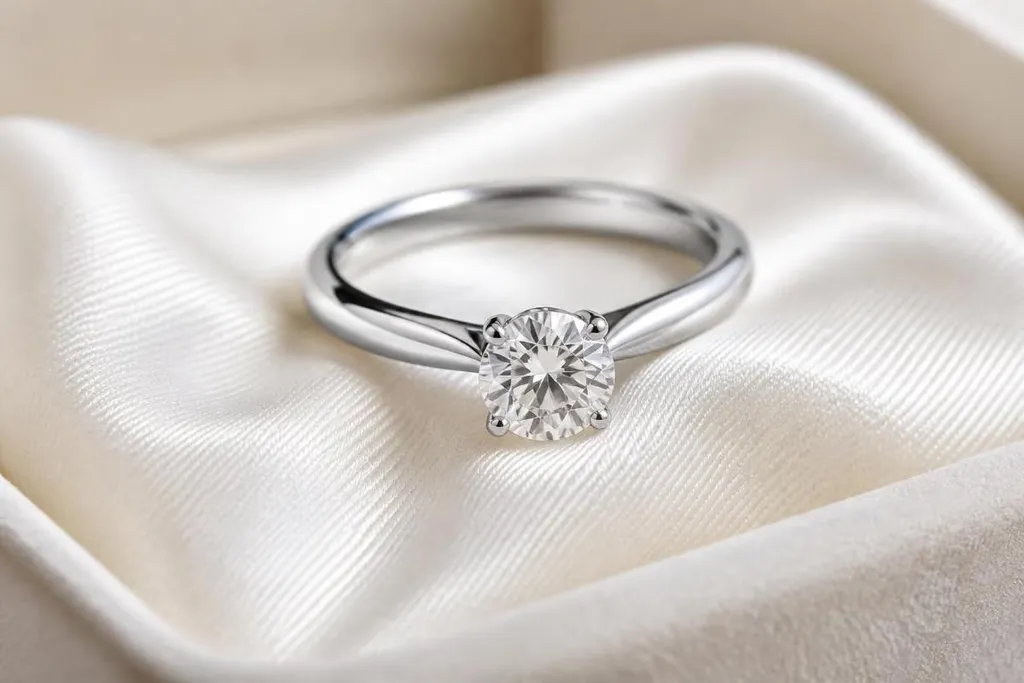
White gold has become an enduring engagement ring choice because it offers a crisp, contemporary appearance while retaining the heritage and intrinsic value associated with gold. Its cool tone creates an elegant backdrop for diamonds and lab-grown diamonds, allowing the stone to take visual priority without the metal disappearing entirely.
For anyone considering hallmarked white gold engagement rings, it is useful to understand what gives the metal its appearance and how that finish changes through everyday wear. White gold is not simply “white-coloured gold”. It is an alloy with its own characteristics, and many pieces receive a rhodium finish to achieve the bright, polished look commonly associated with modern white gold jewellery.
What Hallmarking Tells You About White Gold
Pure 24-carat gold is naturally yellow and relatively soft. To create white gold suitable for jewellery, gold is combined with other metals that modify its colour and improve properties such as strength and durability.
In the UK, qualifying precious-metal jewellery is independently tested and hallmarked. A fineness mark identifies the proportion of pure gold within the alloy. An 18-carat white gold ring, for example, is typically marked 750, indicating 750 parts of gold per thousand.
A full UK hallmark can also carry a sponsor's mark and the symbol of the assay office responsible for testing and hallmarking the piece.
These marks are particularly meaningful for an engagement ring because appearance alone cannot establish precious-metal fineness. Hallmarking provides independent confirmation that the gold meets the represented standard.
Understanding White Gold's Rhodium Finish
The natural colour of a white gold alloy is generally not the intensely bright white seen on a newly finished engagement ring. Depending on the alloy, it can have a slightly warmer or greyer tone.
For this reason, white gold jewellery is often rhodium plated. Rhodium is a precious metal with a bright white appearance, and the thin surface layer gives the ring its highly reflective, polished finish.
That coating is not permanent. Everyday friction gradually wears rhodium plating, particularly on areas such as the underside of the band and between the fingers. Over time, the underlying white gold may begin to show through.
This is normal maintenance rather than damage to the ring. Replating can restore the brighter finish when required, and the frequency depends on how the ring is worn, the thickness and quality of the plating, and individual preference. Some owners prefer a consistently bright appearance; others are comfortable allowing the natural tone of the alloy to become more visible between maintenance visits.
Why White Gold Works With So Many Ring Styles
White gold is particularly effective when the design is intended to place visual emphasis on the centre stone.
With a colourless diamond or lab-grown diamond, the cool-toned setting creates relatively little colour contrast. Fine claws can therefore appear discreet against the stone, helping the diamond remain the focal point.
A solitaire in white gold can feel exceptionally clean and modern. Diamond-set shoulders extend the brightness across the band, while halo and triple-pavé settings can create an almost continuous surface of light.
Geometric cuts also suit the metal particularly well. Emerald, Asscher, radiant and princess-cut stones can look especially crisp against a white gold setting because the metal reinforces their precise outlines. Softer shapes such as oval, cushion and pear cuts provide a more fluid interpretation without losing the cool, refined aesthetic.
Caring for White Gold in Everyday Wear
White gold engagement rings are designed to be worn, but sensible habits can help preserve their appearance. Removing the ring before heavy manual work can reduce unnecessary scratching and impacts, while avoiding harsh household chemicals helps protect the finish.
At home, gentle cleaning can remove the hand creams, soaps and everyday residue that collect around settings and reduce the brilliance of the stones. Highly abrasive cleaning products should be avoided.
Periodic professional inspection is also worthwhile. A jeweller can assess claws and settings, professionally clean the ring and advise whether polishing or rhodium replating would improve its appearance.
If a wedding band will be worn alongside the engagement ring, choosing compatible profiles and metals can also help both pieces wear more consistently where they make contact.
Final Thought
Hallmarked white gold engagement rings combine a refined, cool-toned aesthetic with the reassurance of independently verified precious-metal fineness. Their bright appearance complements an exceptional range of diamond shapes and settings, from restrained solitaires to highly detailed pavé designs.
The key is understanding that the finish requires some maintenance. Rhodium plating will gradually change with regular wear, but professional care can readily restore it. For someone who values crisp styling, versatile design and the character of fine gold jewellery, white gold remains a particularly considered engagement ring choice.